15 min read
How to remodel your home for multi-generational living
Blog

Multi-generational living is a rising trend in Europe and is a lifestyle that offers many advantages. For example, intergenerational living provides financial stability and emotional support. It can also strengthen family bonds and promote cross-generational exchange. In addition, having several generations living together under one roof can make babysitting and elderly care easier.
However, multi-generational households are also faced with challenges, such as lack of privacy, lack of space and an increased risk of personality clashes. Luckily, a good planning of the shared and private living spaces and open and clear communication can reduce the risk of unnecessary conflicts.
Checklist for home adaptation to multi-generational living
A good first step is to sit down together to make a checklist of all the must-haves, making sure that they fit into your home and budget:
- How many bedrooms, bathroom and cloakrooms do you need?
- How many sitting rooms? Separate sitting rooms for adults and children can be a good idea to avoid having toys everywhere or to provide teenagers with a hang-out space.
- What about shared and private storage? You will need storage, not only for clothes and food, but for cleaning equipment, toys, gardening tools and hobbies.
- How many kitchens? If you only have one kitchen, you may need to fit it with several cookers, ovens and fridges, for example.
- What about utility rooms? You may need to install more washing machines and dryers in your utility room, or add them to some of the bathrooms.
- One single entrance or several? Having separate entrances can offer in-laws or children in their late teens more independence.
- Do you have enough parking space?
- Will you need a home elevator? If your household includes senior members, a home elevator may become necessary with time.
To get inspiration for designing your multi-generational home, check out these examples by Deezen.


Combined bathroom and cloakroom with washing machine and dryer.
5 ways to adapt your home for intergenerational living
This all brings us the next point: different solutions to reconfigure, adapt or extend the space you have, to accommodate all the generations of your big household.
1. Using Partition Walls
In rooms with several windows, putting up a new partition wall to create two rooms may be a good solution. However, sometimes you do not need to build a wall. A bookcase or a set of strategically placed curtains may also work to create a partition in communal spaces. In addition, in an open-plan living space, a kitchen island will create a natural border between the kitchen and the living room and can provide extra space for food prepping and eating.
2. Adapting Existing Rooms
Another great possibility is to adapt your existing living space to multi-generational living. Sometimes this is an easy fix. A dining room that you hardly ever use, can be easy to reconfigure into an office space or a bedroom. If you have a large, open-plan living space, creating “little islands” of furniture with distinctly different purposes can make a single or dual purpose room multi-functional.
Fitting your kitchen, utility room or bathrooms with more appliances and commodities is yet another way to make your home accommodate more people. For example, if you have a rather spacious cloakroom or utility room, fitting an extra shower may be worth considering.
3. Converting Storage Spaces
Converting a storage space into a living space is a classic. For example, if it is easy to park outside on the driveway or in the street, converting your garage may be a great possibility to increase your living space. In some cases, you can also get permission to add one or several storeys on top of the garage, creating even more space.
Repurposing your basement or your attic are other popular options, but these spaces come with potential challenges. Your attic space may be limited by sloped ceilings and beams, or lack insulation, for example. A basement may have low ceilings, very small windows and humidity problems. Nevertheless, if the investment makes sense, a converted basement or attic can become a charming new living space.
Some houses also have storage rooms, like walk-in closets. Such rooms can potentially become bathrooms or bedrooms instead, especially if they have a window or can be fitted with one.
You need to be aware that many conversions will require a building permit. Also make sure that the converted space meets the requirements for health and safety for living quarters. Furthermore, if you convert a storage space, you need to ensure that you have enough room to store your things elsewhere.

Example of an attic converted into a bedroom with wall-fitted lamps and bedside tables.
4. Building an Extension
Depending on the size and layout of your home, building an extension may be necessary to increase your living space enough to fit all generations. Building extensions can be a great solution, if you do it right, and just like in the case of a garage conversion, you should explore the possibility of adding one or more storeys to maximise your living space.
However, a building extension is a rather big investment that always requires a building permit. Therefore, hiring an architect is generally money well spent. Not only can architects come up with solutions that you would never think about yourself, but they often know the best and most reliable builders in town.
Always check the credentials of the architect, before you start working together. In the UK, for example, you can check if the architect is a member of RIBA (the Royal Institute of Architects) and of course, you should always ask for customer references.
5. Installing an Elevator
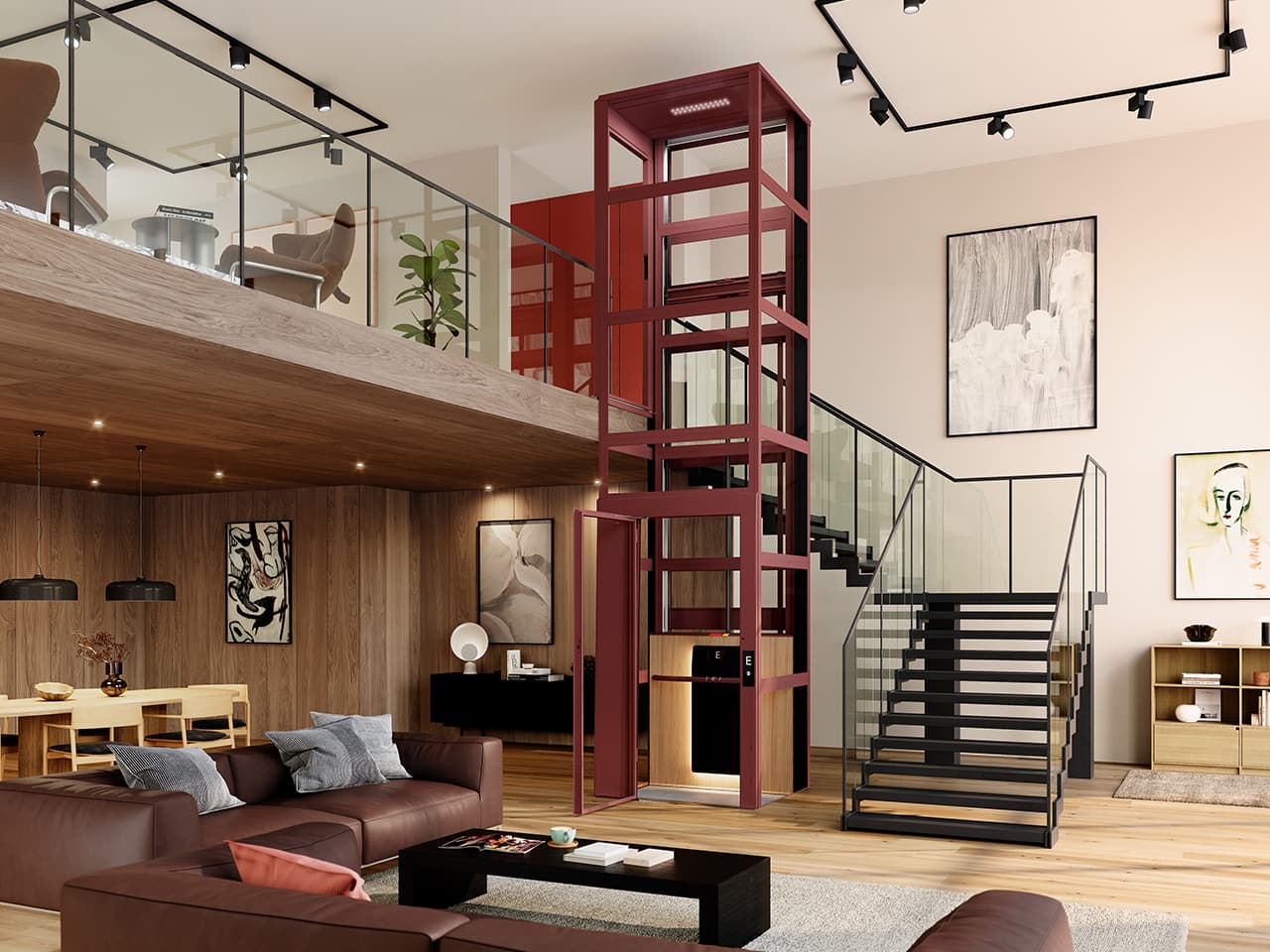
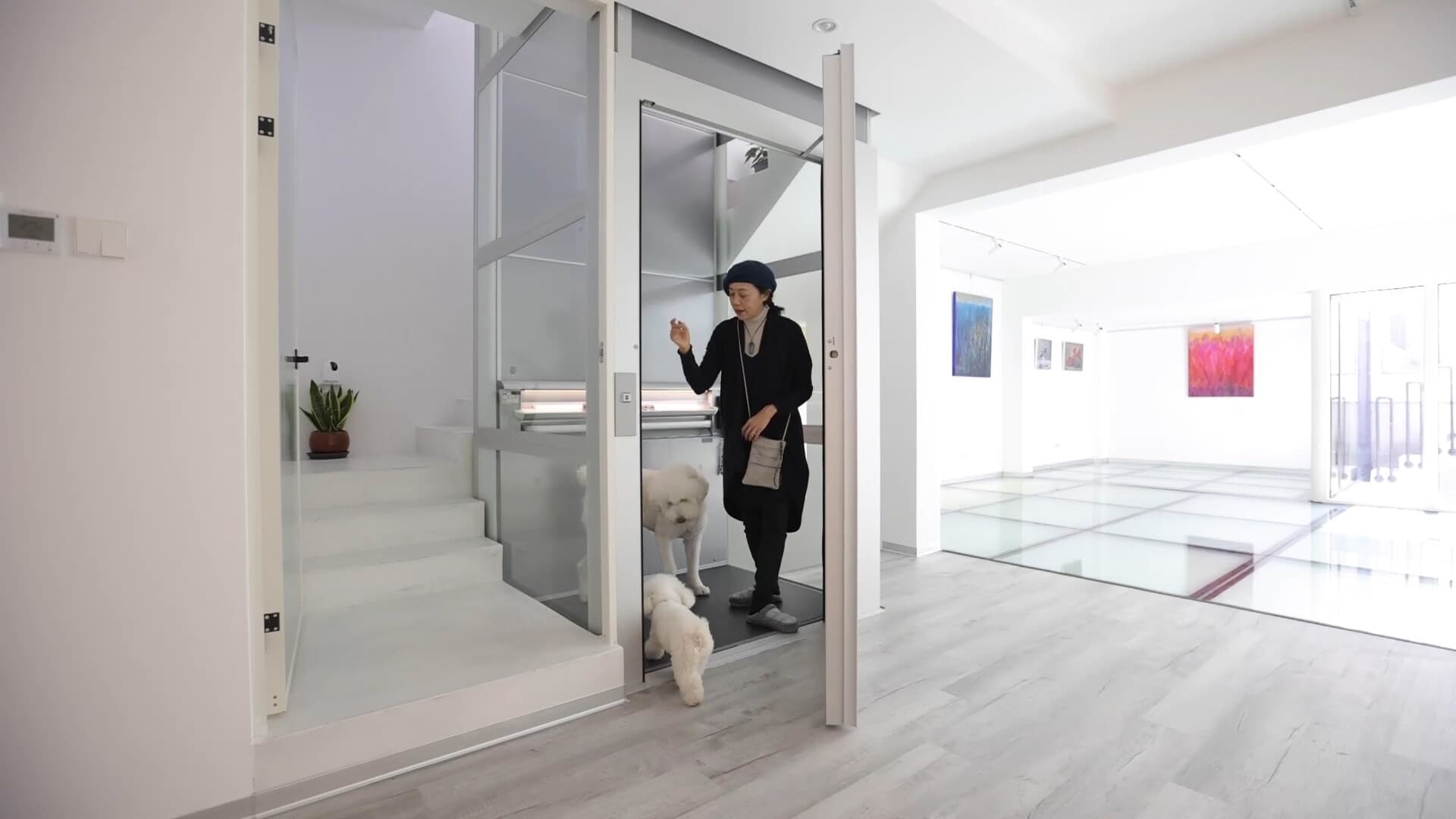
If your multi-generational household includes senior family members, or if you want to future proof your home, getting a home elevator, is a smart investment. A lift provides easy access to all floors and increase the value of your home. In addition, a residential lift will make household chores like cleaning, doing laundry and moving furniture between floors much easier.
Home elevators come in all shapes and sizes and the price ranges between 20 000 and 45 000 € for a 2-stop lift, depending on options and accessories. Although getting a domestic lift is an investment, it is money well spent. It makes everyday life more convenient for everyone and allows senior family members to age comfortably in place. Kalea Lifts offers home elevators ranging from small residential lifts that fit inside a wardrobe, up to larger, wheelchair-friendly lift models and outdoor lifts.

The Kalea Luna is a space-saving residential elevator with low energy-consumption.
Ground Rules for Successful Intergenerational Living
Living together with your extended family is a both financial and emotional investment. That is why you need to set down some ground rules for how you want your new big family to work. Because of its size and age span, running a multi-generational household is a bit like running a family business, where everyone one has defined roles and responsibilities.
- Definition of roles – Defining the roles and responsibilities of the adult members of the household will make living together easier. Appointing responsibilities for things like joint finances and savings, cleaning, gardening, and renovations will also make the household easier to run.
- Finances – It is very important to ensure that the financial burden is clearly divided between the parties and that everyone agrees.
- Decision making – Determine what decisions are collective and how you make them. One solution is to set up a family council where all members have the right to vote.
- Distribution of chores – Decide together how you want the distribution of household chores to work. For big families a rotating schedule can make communal life easier and more efficient.
- Division of space – Make rules for what is private and what is shared in terms of space and set up clear boundaries. For example, if the door of a private room is closed, you can have the rule of always knocking before you enter.
In short, clear rules and open communication are key. It is always best to test your family’s ability to discuss and compromise, before you invest to bunk up together. To read more about the joys and challenges of intergenerational living, visit this blog by IKEA.

If you liked this blog and want to read more, please visit our blog space. To learn about different home elevator solutions by Kalea Lifts, just contact us.